In our previous article, “Beyond Pills: AI-powered ADHD Management for Real-World Change,” we explored how artificial intelligence is redefining ADHD care — moving beyond medication to deliver personalized, daily empowerment. Now, it’s time to see how these ideas come to life.
In this follow-up, we take a closer look at real-world AI applications in ADHD management — from leading tools like EndeavorRx and Goblin.tools to the key features that make top apps successful. You’ll also discover how AI-powered personalization, emotion detection, and neuroadaptive feedback are reshaping the way individuals — and developers — approach cognitive health.
Whether you’re building a new mental health product or scaling an existing one, this article will guide you through the technologies, challenges, and opportunities that define the next generation of ADHD innovation.
Real-World Examples: How ADHD Apps Leverage AI
Through our observations, we notice that some tools excel while others reveal gaps that AI can fill:
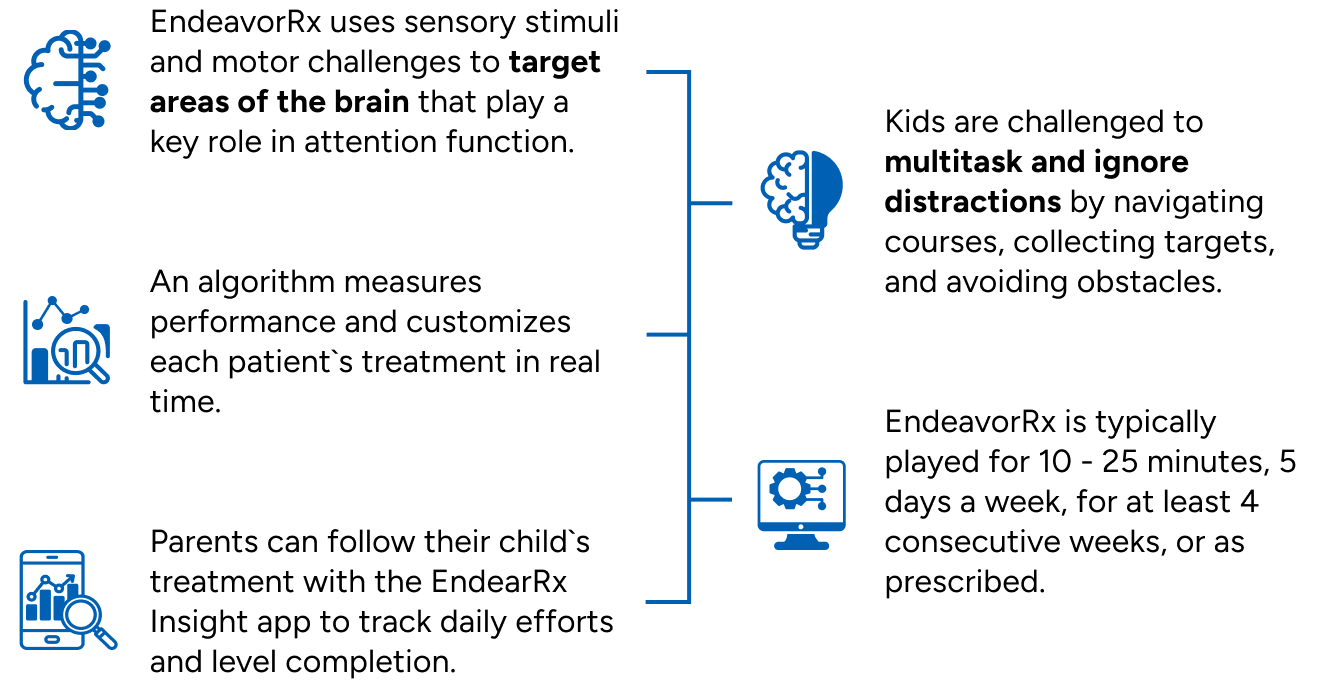
- EndeavorRx / EndeavorOTC – Video-game-based training for children and adults. Clinically validated but works best as a supplement and requires ongoing motivation.
How EndeavorRX works
- AI Chat Assistants (e.g., ChatGPT) – Serve as an “external executive function,” helping structure tasks and reduce cognitive overload. Flexible but dependent on context and prompt quality.
- Cogmed – Neuroscience-based working memory training. Clinically backed, improves focus in structured tasks, but can feel repetitive.
- AI Note-Takers – Transcribe and summarize lectures, meetings, and ideas. Reduce cognitive load but may raise privacy concerns and occasional errors.
- Goblin.tools – Converts vague goals into actionable steps. Highly ADHD-friendly but requires consistent use and occasional editing of generated steps.
A collection of small, simple tools, for when things feel too big or complicated.

These examples show how AI already supports people with ADHD be helping them manage attention, planning, and motivation challenges. At the same time, they reveal room for improvement- especially in areas like personalization, sustained engagement, and data privacy.
10 Key Features of Top ADHD Apps
When looking at leading ADHD-related apps such as EndeavorRx, Cogmed, and Goblin.tools, several recurring features define their success. For IT companies building similar products, these features reveal both the opportunities and the technical pains your team will face — and how a specialized AI partner can help you solve them.
Personalized Cognitive Training. Top ADHD apps adapt in real time to users’ cognitive performance, which requires advanced ML models, robust data pipelines, and medical-grade compliance — achievable through adaptive AI frameworks and secure architectures designed for ethical healthcare innovation.
Gamified Motivation Loops. Balancing engagement and evidence-based design is a constant challenge, yet behavioral analytics and reinforcement learning can automatically optimize challenge and reward cycles to boost user retention.
Emotion and Focus Detection. Detecting distraction or frustration from voice, facial, or text input demands multimodal AI capable of real-time, privacy-preserving emotion recognition that adapts dynamically to each user’s state.
Smart, Adaptive Notifications. Reminders can either support or overwhelm ADHD users, so context-aware notification systems that detect cognitive overload and adjust timing and tone dynamically can improve adherence and reduce stress.
Natural Language Coaching. Empathetic, conversational support is hard to scale, but fine-tuned language models with controlled tone and safety layers can provide ADHD-specific coaching experiences for both children and adults.
Task Simplification & Executive Function Support. Turning complex goals into step-by-step plans requires a blend of NLP and UX design, with task breakdown algorithms that automatically generate structured, motivating action plans from unstructured input.
Adaptive Feedback & Progress Tracking. Users need feedback that feels encouraging, not evaluative, which can be achieved through AI dashboards that analyze engagement patterns and adjust tone and feedback in real time to sustain motivation.
Voice & Multimodal Note-taking. Standard AI note-takers often fail with ADHD users’ nonlinear, emotional speech, whereas models fine-tuned for ADHD communication styles can produce clear, structured summaries from fragmented input.
Parent & Clinician Dashboards. In child-focused apps, secure data sharing and clarity for caregivers are crucial, supported by AI-powered dashboards that visualize progress, flag potential issues, and ensure GDPR/HIPAA compliance.
Personalized Cognitive Profiles. Every ADHD user is unique, and manual personalization can overwhelm UX teams, but AI-driven personalization engines that learn from user behavior can continuously adapt the app experience for each individual.
What This Means for IT Teams
Developing ADHD-oriented products isn’t just about adding features — it’s about building adaptive, emotionally intelligent, and compliant systems.
By integrating AI at the core, your product can evolve with each user’s needs while meeting the highest ethical and technical standards.
The Toolkit: AI, Wearables, and Adaptive Algorithms
Modern ADHD solutions increasingly rely on integrated ecosystems:
- Adaptive Algorithms: Predict attention lapses and adjust interventions in real-time.
- Wearables: Track heart rate, micro-movements, and pause patterns to model attention and stress.
- Chatbots & Smart Assistants: Break tasks into actionable steps and provide context-aware prompts.
At Amazinum, we implement neuroadaptive AI systems where clinicians receive actionable insights from dashboards, while apps deliver adaptive support directly to users. This hybrid model combines human judgment with AI intelligence, improving engagement and outcomes.
Solutions for App Developers
Based on our observations, we help ADHD app developers address critical gaps:
- Adaptive AI Engines – Continuously learn from user behavior and adjust tasks, notifications, and cognitive exercises.
- Neuroadaptive Feedback Loops – Provide personalized, empathetic guidance that motivates users without overwhelming them.
- Integrated Analytics Dashboards – Enable clinicians and caregivers to monitor progress, detect anomalies, and intervene only when necessary.
- Ethical & Secure Architecture – Ensure compliance with privacy and security standards while maintaining personalization.
From Observation to Action: Workshops and PoC
At Amazinum, we translate observations into real-world solutions through workshops and Proof-of-Concept (PoC) projects.
Workshops: Collaborate with teams to identify pain points, ideate AI interventions, and define MVPs.
PoC Projects: Prototype neuroadaptive AI systems, test real-world usability, and validate efficacy before full-scale implementation.
AI-powered ADHD management is no longer optional — it is essential. By combining market observations with deep AI expertise, Amazinum helps developers create apps that go beyond pills, delivering sustainable, measurable improvements in attention, executive function, and quality of life.
Take the next step:
Contact our team for a pilot project, co-development, or strategic workshop. Together, we’ll transform ADHD care — beyond pills, beyond limitations.
Lets shake these things up with You, AI and Amazinum together !